Nils Schwarz · 2 November 2026
Novafeld's Shifting Night Skies: How Light Pollution from Tech Expansion Alters Local Stargazing Traditions
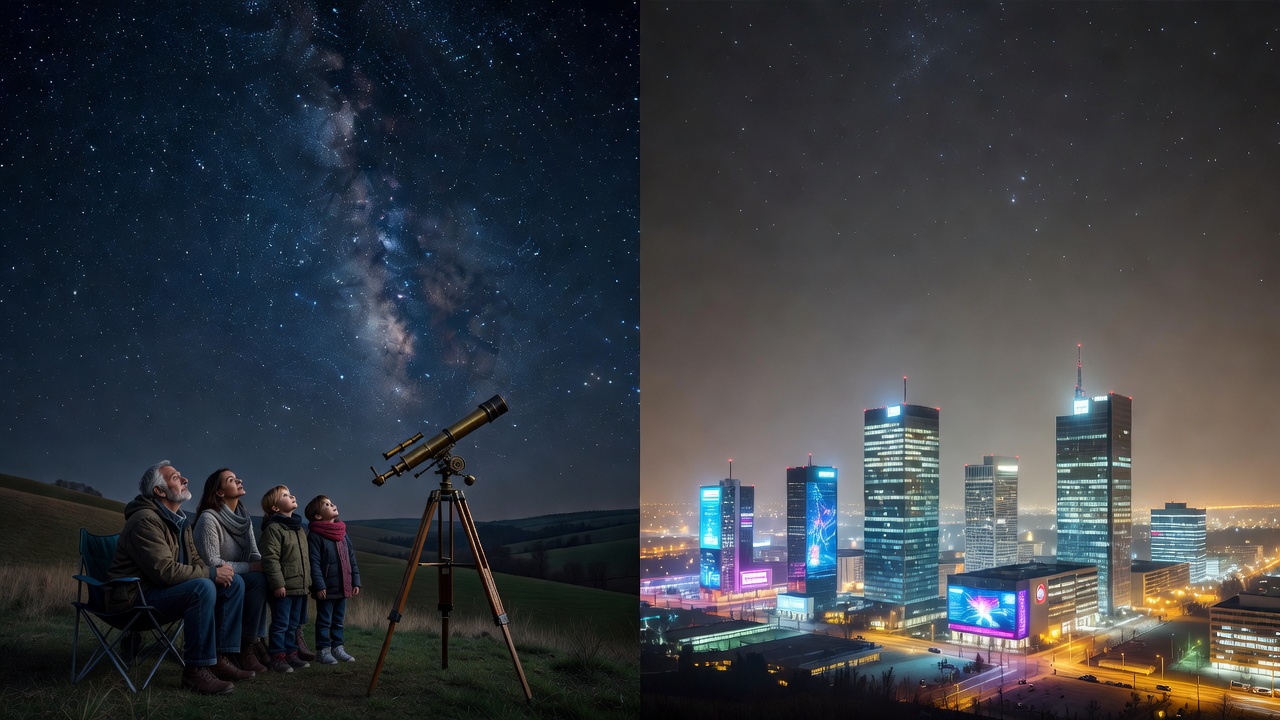
Tech facilities in Novafeld have multiplied over the past decade while street lighting and building illumination have grown in tandem, and these changes now reduce the contrast between stars and the background sky during clear evenings. Local astronomy clubs report that certain constellations once visible from central parks require travel to more distant viewpoints, and this shift coincides with the arrival of multiple data centers and software campuses on the town's eastern edge.
Expansion Patterns and Light Output
Construction permits issued between 2020 and 2025 show a steady rise in commercial floor space dedicated to technology firms, and each new structure typically incorporates exterior security lighting that operates through the night. Measurements taken by regional environmental monitors indicate that average sky brightness at fixed observation points has increased by measurable increments during this period, while older residential neighborhoods experience the most noticeable change because they sit closest to the newer industrial zones.
Utility records reveal that nighttime electricity consumption for outdoor lighting in commercial districts rose steadily through 2024, and similar patterns appear in adjacent municipalities that also host growing tech corridors. Planners note that many installations still rely on older high-pressure sodium lamps rather than full-cutoff LED fixtures, and this choice contributes directly to upward light spill that scatters in the atmosphere.
Effects on Traditional Viewing Sites
Community groups have documented reduced visibility of the Milky Way from the town common and from the hilltop park that once served as the primary gathering spot for monthly star parties. Participants now travel farther west or north to reach darker horizons, and the added distance has altered the informal schedules that families maintained for decades. November 2026 marks the next scheduled public viewing night, and organizers have already adjusted the location to a site several kilometers outside current municipal boundaries.
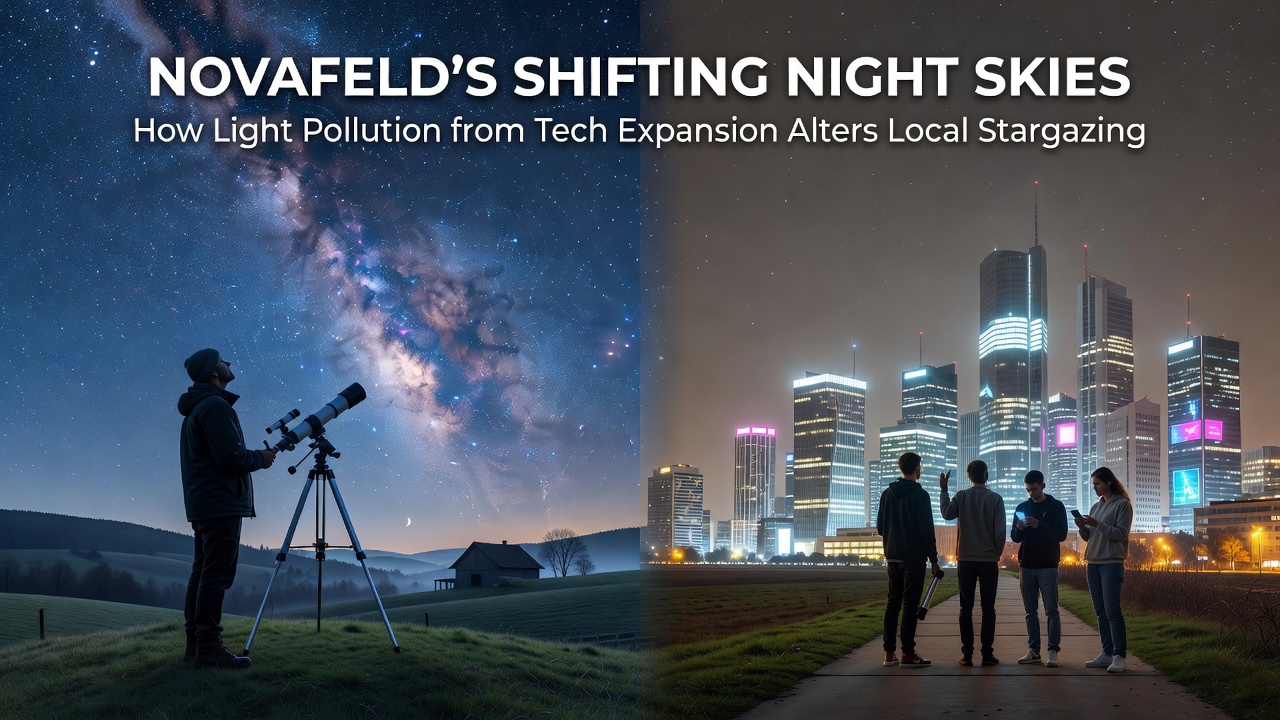
Schools that once incorporated basic constellation lessons into autumn field trips have shifted some sessions to planetarium simulations, and teachers cite the practical difficulty of obtaining clear views within walking distance of campus. Data collected by a university research team working in partnership with the local observatory shows a consistent correlation between the growth of lit commercial acreage and the number of nights when the naked-eye limiting magnitude drops below previous averages.
Responses from Local Institutions
The municipal planning board has begun requiring new developments to submit lighting plans that limit upward glare, and several firms have retrofitted fixtures on existing buildings following these guidelines. Observers from the regional environmental agency track compliance through periodic audits, and early results indicate modest reductions in measurable spill at a handful of sites. Community workshops organized by the library have introduced residents to shielded fixture designs and timer systems, and attendance at these sessions has grown as more people notice the changing sky conditions.
International Dark-Sky Association resources have informed some of these discussions, providing technical specifications that local engineers adapt to regional building codes. A separate study released by the European Environment Agency outlines comparable trends in other mid-sized towns experiencing rapid technology-sector growth, and planners in Novafeld have referenced those findings when drafting updated outdoor lighting ordinances.
Broader Context and Ongoing Monitoring
Satellite imagery compiled over successive years documents the expanding footprint of brightly lit zones around Novafeld, and researchers continue to correlate these images with ground-based measurements of sky quality. Agricultural lands on the periphery remain comparatively dark, yet access roads serving new facilities introduce linear sources of light that fragment former dark corridors. Residents who maintain personal logs of visible celestial objects note that planets remain observable on most clear nights, while fainter deep-sky targets require darker locations more consistently than before.
Efforts to balance continued economic development with preservation of nighttime darkness now appear in draft comprehensive plans, and public comment periods have drawn input from both technology companies and astronomy enthusiasts. Continued data collection through the coming years will determine whether current mitigation measures produce measurable improvements in sky brightness at established viewing points.
Conclusion
Light levels tied to tech expansion continue to reshape the practical conditions for stargazing in Novafeld, prompting adjustments in where and when residents gather to observe the night sky. Monitoring programs and revised lighting standards represent the primary tools currently in use, and their long-term outcomes will depend on consistent application across new and existing developments.