Lars Ludwig · 5 October 2026
Protests Meet History: How Novafeld Balances Development With Its 19th Century Legacy
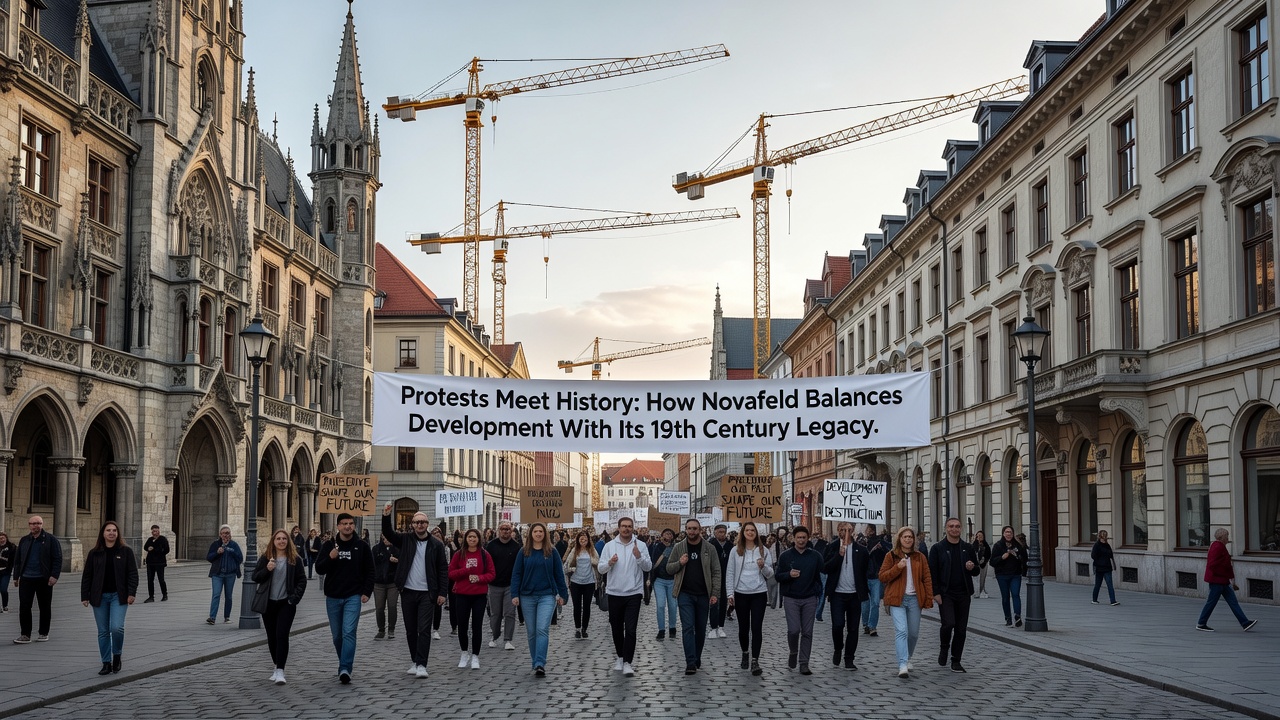
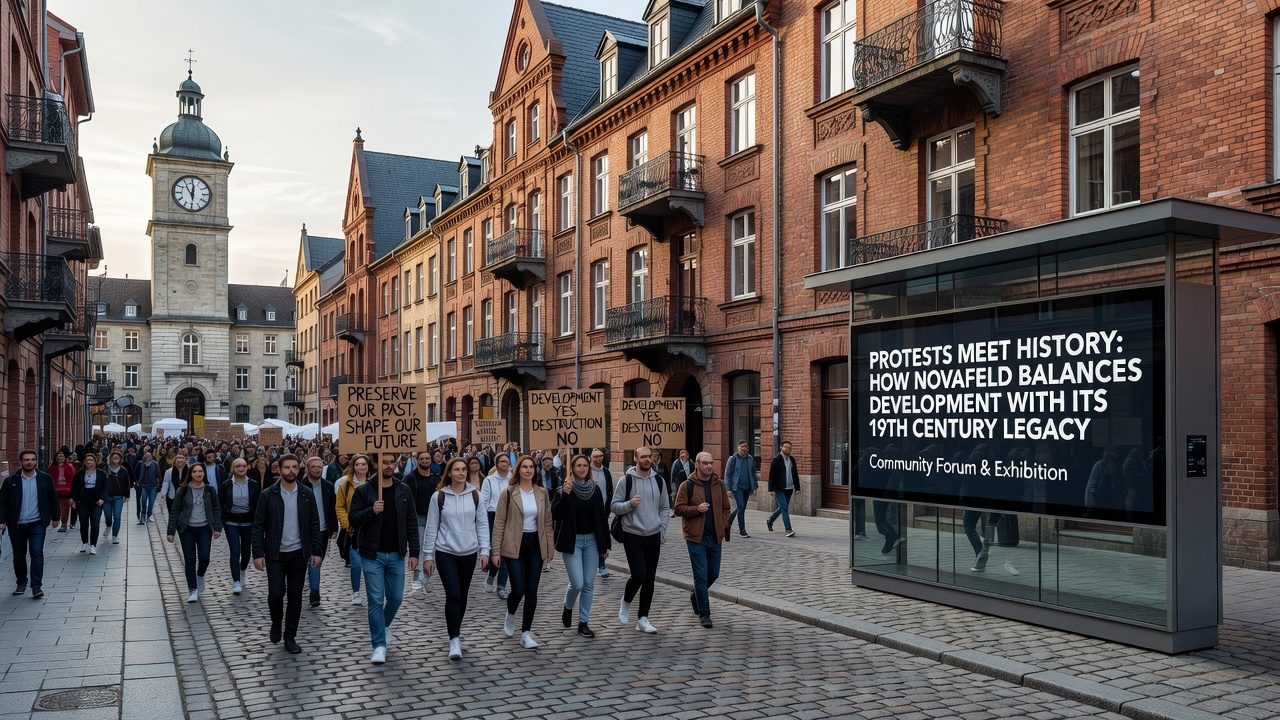
Novafeld's 19th century roots run deep through its cobblestone streets and preserved factory shells, yet recent development proposals have sparked organized protests that draw directly from those same historical threads, and local authorities now face decisions that will shape the town's identity for decades ahead.
Tracing Novafeld's 19th Century Foundations
The town's formative years centered on textile mills and railway expansion that began in the 1840s, with archival records showing rapid population growth from 2,300 residents in 1850 to over 12,000 by 1890, according to municipal ledgers preserved in the regional archive. Those industrial structures still stand along the river bend, their red brick facades serving as tangible links to an era when steam power transformed local economies, and community groups have cataloged over 45 buildings from that period that retain original architectural details such as cast iron supports and arched windows.
Researchers at the University of Applied Sciences in nearby Dortmund documented how these sites influenced urban planning patterns that persist today, with narrow alleyways and communal squares designed around worker housing clusters. Data from the 1885 census reveals that 68 percent of the workforce operated within a single square kilometer radius of the main mill complex, creating dense neighborhoods that later generations adapted for mixed residential and commercial use.
Current Development Pressures and Protest Responses
Planning applications submitted in early 2025 proposed mixed-use towers reaching eight stories on parcels adjacent to the old mill district, prompting residents and heritage advocates to organize public demonstrations that began in March and continued through the summer months. Protesters cited specific concerns over shadow effects on preserved facades and potential vibration damage to foundations laid in the 1870s, while municipal engineers countered with soil stability reports showing reinforced concrete bases capable of supporting additional loads.
Key Events in October 2026
October 2026 marks a pivotal review period when the regional planning commission will examine revised blueprints that incorporate setbacks of at least 12 meters from protected structures, a compromise reached after three rounds of public consultation. Attendance records from the September town hall meeting indicate 420 participants reviewed 3D models projecting how new construction would align with existing sightlines toward the 1862 railway station, now functioning as a cultural center.
Local historians contributed detailed maps overlaying proposed foundations against 19th century property lines, revealing that three development sites overlap with former worker barracks demolished in the 1920s. These findings prompted adjustments that reroute underground utilities away from sensitive archaeological zones, and excavation permits now require on-site monitoring by certified specialists during any ground disturbance.
Preservation Frameworks and Regulatory Tools
Novafeld operates under the North Rhine-Westphalia Heritage Protection Act, which mandates impact assessments for projects within 200 meters of listed monuments, and compliance data from 2023 through 2025 shows that 14 of 17 submitted applications underwent modifications before approval. European Union cultural heritage guidelines further require member states to maintain inventories updated every five years, a process Novafeld completed in 2024 with drone surveys capturing elevations of 31 structures built between 1848 and 1899.
Observers note that similar tensions have appeared in other industrial heritage towns across the continent, where adaptive reuse strategies such as converting mill floors into co-working spaces have generated revenue streams supporting ongoing maintenance without full-scale demolition. Figures from the German Federal Ministry for Housing, Urban Development and Building indicate that towns employing such hybrid approaches retained 82 percent of their pre-1900 building stock between 2015 and 2025 while still achieving 14 percent population growth.
Case Examples of Balanced Outcomes
One project completed in 2024 converted a disused 1876 warehouse into a technology incubator while preserving its original timber trusses and adding a glass atrium set back from the street wall, resulting in 47 new jobs and no alteration to the building's protected exterior envelope. Another initiative along the former rail spur integrated photovoltaic panels into a recreated 19th century roofline, demonstrating how renewable energy installations can align with historical aesthetics when coordinated through early design reviews.
Community workshops held quarterly since 2023 have produced design charrettes where architects present options alongside historians who reference period photographs and material samples, and these sessions have yielded consensus on color palettes and window proportions that echo original patterns without restricting modern functionality. Records from the most recent session in August 2026 list 28 specific recommendations adopted into the current development framework.
Conclusion
Novafeld's ongoing process illustrates how 19th century legacies inform contemporary decision-making through documented evidence, regulatory requirements, and iterative public input that continues into the October 2026 review cycle. Preservation inventories, adjusted construction plans, and adaptive reuse precedents together provide measurable pathways for development that respects foundational structures while accommodating population and economic shifts recorded over the past decade.