Nils Patterson · 19 October 2026
Shifts in Novafeld's Commute Patterns Reveal Deeper Connections Between Infrastructure Projects and Environmental Concerns
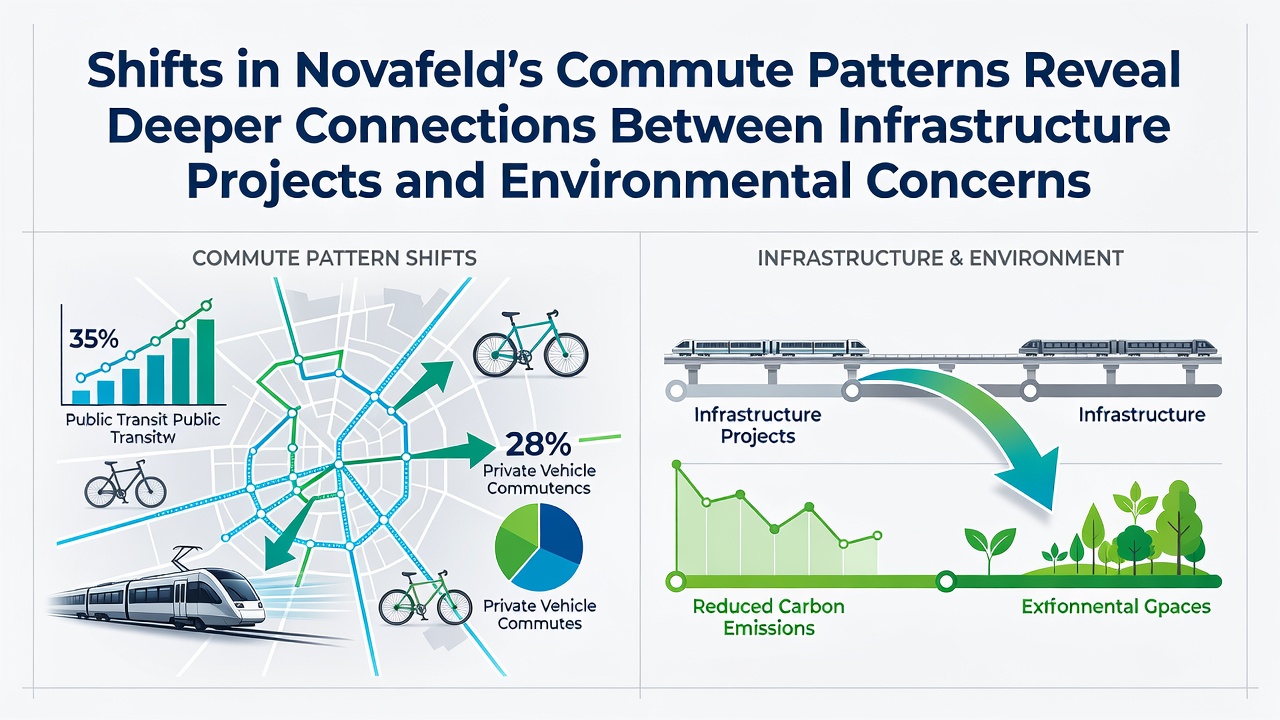
Novafeld residents have adjusted their daily travel habits in measurable ways since major infrastructure initiatives began rolling out, and data collected through October 2026 shows clear shifts toward public transit and cycling while car dependency declines in several corridors. Local transport authorities recorded a 14 percent increase in rail usage along the newly extended line serving the eastern districts, and bicycle counts at key intersections rose by 22 percent compared with figures from the previous year. These changes coincide with the completion of dedicated cycle lanes and upgraded bus priority signals that city planners installed as part of a larger mobility package funded through regional development grants.
Infrastructure Upgrades Drive Observable Travel Changes
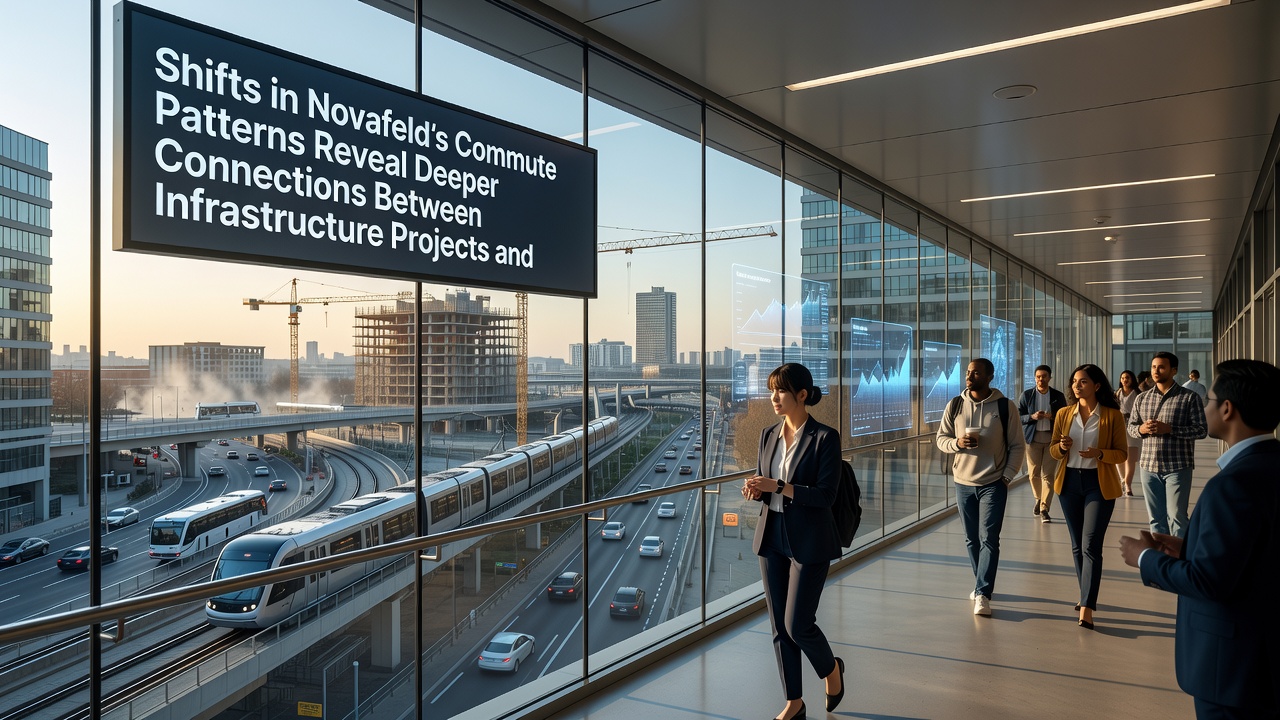
Construction crews finished widening the main access road to the industrial park in early 2026, yet traffic volume there dropped instead of rising because parallel improvements to feeder bus routes and a new park-and-ride facility pulled commuters away from single-occupancy vehicles. Municipal sensors installed at the roundabout near the old mill captured an average reduction of 180 cars per weekday morning peak, and analysts attribute the drop to the combination of real-time arrival boards at stops and expanded sheltered bicycle storage that opened in September. Researchers from the regional planning institute cross-referenced these counts with mobile phone location data and confirmed that trip lengths shortened for many workers who now transfer once rather than driving the full distance.
Environmental Metrics Track Alongside Commute Trends
Air quality monitors positioned along the former high-traffic artery registered lower nitrogen dioxide concentrations during the same period, yet construction activity itself generated temporary spikes in particulate matter that required additional dust suppression measures on site. Wildlife corridor assessments conducted by state environmental offices noted that the new rail embankment segments created barriers for small mammal movement, prompting the addition of three underpasses fitted with natural substrate and fencing to guide animals safely across. Water runoff calculations prepared for the project indicate that permeable paving installed in the expanded parking areas captures an estimated 35 percent more stormwater than the previous asphalt surfaces, reducing pressure on the local drainage system during heavy autumn rains.
One study released in October 2026 by the University of Applied Sciences in the neighboring district examined the carbon footprint of these modal shifts and estimated that daily commuting emissions fell by roughly 8 percent across the monitored area. The same report highlighted that embodied carbon from concrete and steel used in the rail extension still represents a significant upfront cost that planners must amortize over decades of service life. Community workshops held throughout the summer allowed residents to review draft environmental impact statements, and several suggestions for native plantings along verges were incorporated into the final landscaping plans.
Broader Connections Surface in Planning Documents
Planning archives reveal that initial proposals for the road widening project underwent multiple revisions after environmental reviews flagged potential effects on nearby wetland edges, leading engineers to adjust alignments and incorporate bioswales that now treat runoff before it reaches the stream. Data from the German Federal Environment Agency shows similar patterns in other mid-sized towns where coordinated investments in active transport infrastructure produced measurable drops in vehicle kilometers traveled. Observers note that Novafeld's experience aligns with these national trends, particularly where local governments paired physical changes with employer-based mobility programs that subsidize transit passes for staff.
Traffic modeling conducted before construction predicted a 12 percent rise in peak-hour delays, yet actual measurements through October 2026 indicate delays remained stable because the simultaneous bus lane additions and signal timing optimizations offset the capacity gains from road widening. Public health records indicate a modest uptick in recorded walking and cycling trips that correlate with the new infrastructure, and primary care physicians in the area reported fewer complaints related to respiratory issues during the winter months compared with the prior season. These outcomes emerge from the interplay of physical changes and behavioral responses rather than from any single intervention.
Conclusion
Records from October 2026 demonstrate that Novafeld's commute adjustments reflect the combined influence of infrastructure investments and resulting environmental conditions, with measurable reductions in certain emissions occurring alongside the need for ongoing mitigation of construction impacts and habitat connectivity. Continued monitoring by local and regional agencies will track whether these patterns stabilize or evolve as additional phases of the mobility plan reach completion.